5 Pillars of a Crypto Plan for the Next Cycle
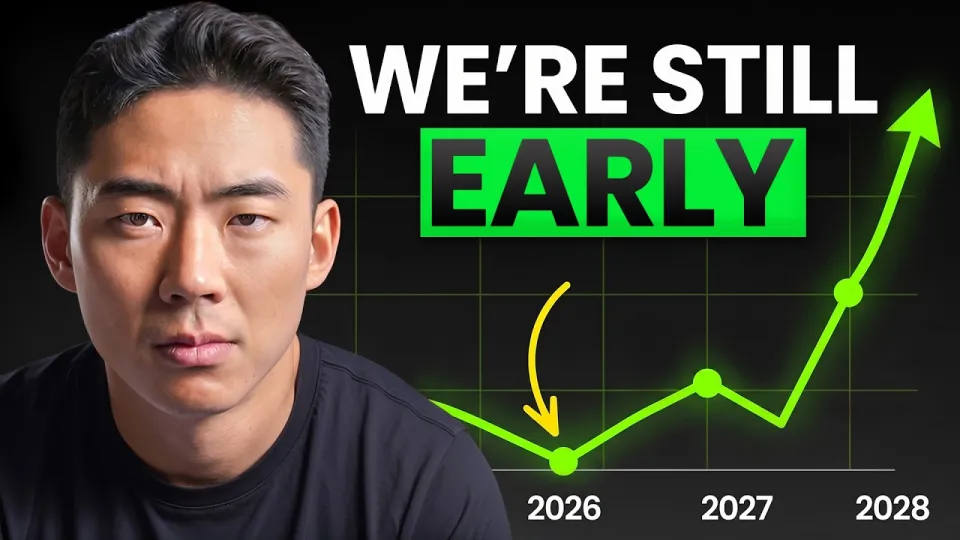
Video: my plan to make millions in crypto 2027
You can order the same kind of articles for your own video to boost it on YouTube and Google. Just message the Telegram bot @sat_sit_bot. Articles with your video embedded are written and posted by the bot itself — on popular topical sites (no ads). Your first 50 articles are free.
· based on the channel Brian Jung
Key takeaways
- Brian Jung's 2027-cycle breakdown splits his crypto plan into five pillars: macro, narratives, allocation, risk management and exits.
- The plan weights Bitcoin and Ethereum as the core and caps high-conviction altcoins at a smaller share of the portfolio.
- Narratives named in the discussion include real-world asset tokenization, AI-linked crypto projects and Sui (SUI).
- Regulatory clarity, including stablecoin legislation in the US, is treated as a tailwind rather than a threat to crypto.
- The Kaizen Pro waitlist and the free Kaizen market report newsletter are the two resources promoted alongside the video.
A crypto plan for the next cycle works best when it is built on five pillars: macro liquidity, real narratives, a defined altcoin allocation, strict risk rules and a pre-planned exit. Brian Jung's breakdown of his 2027 plan follows that structure, pairing a bullish macro thesis with concrete position sizing and a hard rule that the cycle top is decided in advance, not in the heat of the moment. Readers who want the full framework can join the Kaizen Pro waitlist for the paid research product.
Why the macro backdrop still supports a bullish crypto thesis
The bullish case rests on liquidity, not on hype. Jung's argument is that crypto is a liquidity-sensitive asset class: when money supply expands and real yields fall, capital rotates out of cash and bonds into scarcer assets, and Bitcoin is usually the first stop. He also points to institutional access that did not exist in earlier cycles — spot Bitcoin and Ethereum ETFs, corporate treasury buying and a growing base of registered investment advisors who can now allocate client money to digital assets.
On the regulatory side, the tone has shifted from enforcement to rule-making. Stablecoin legislation in the US gave dollar-pegged tokens a clearer legal footing, and that matters more than most retail investors realize: stablecoins are the settlement layer for a large share of crypto trading volume. The viewer debate about whether regulatory clarity is good or bad for crypto misses the point — banks entering the space does not remove self-custody or open networks, it adds distribution. The risk is concentration, not legitimization.
The narratives driving the next cycle
Narratives decide where the marginal dollar goes, and three stand out in the plan. First, real-world asset tokenization: tokenized treasuries, private credit and money-market funds are already live products with billions in assets, and every new issuance pulls traditional finance closer to on-chain settlement. Second, AI plus crypto: decentralized compute, data provenance and agent-to-agent payments are early but attract disproportionate developer attention. Third, high-throughput layer-1 chains, with Sui (SUI) named as one of the ecosystems worth tracking for its object-based model and consumer-facing apps.
Ethereum sits underneath several of these themes at once. Tokenized funds, stablecoin issuance and most layer-2 activity settle on Ethereum, which is why the plan treats ETH as core infrastructure rather than a speculative altcoin. The practical filter for any narrative is simple: does it have paying users and revenue today, or only a roadmap? Narratives with revenue survive drawdowns; narratives with only a slide deck do not.
How to size a portfolio across Bitcoin, Ethereum and altcoins
Allocation is where most retail portfolios fail, so the plan uses tiers instead of equal-weight bets. A workable version looks like this:
- Core (roughly 50–60%): Bitcoin and Ethereum. These are the assets with ETF flows, institutional custody and the deepest liquidity.
- High-conviction alts (roughly 20–30%): three to five names tied to narratives with real usage, such as tokenization or Sui's ecosystem.
- Satellites (roughly 10–15%): smaller, higher-risk positions sized so that a total loss does not damage the portfolio.
- Dry powder (roughly 10%): stablecoins held for drawdowns, not for yield chasing.
The exact percentages depend on age, income and tolerance for volatility, but the principle does not: the core should be boring, and the satellites should be small. One viewer's plan to put 50% into altcoins is aggressive but not irrational — provided the 50% is spread across several narratives and the investor can sit through a 70% drawdown without selling.
Risk rules that keep a crypto plan alive
Risk management is the difference between a plan and a lottery ticket. Position sizing comes first: no single altcoin should be large enough that a 90% decline changes your financial life. Second, avoid leverage on altcoins — liquidation wicks are designed to remove over-leveraged traders, and the 2025 experience many investors describe, of following a bullish call and losing heavily, usually traces back to leverage or to buying after a vertical move.
Third, use time-based and price-based rules rather than feelings. Scaling out in tranches as an asset appreciates, and rebalancing when a position grows beyond its target weight, locks in gains without requiring a perfect top call. Fourth, keep custody simple: hardware wallet for the core, exchange balances only for active trading. Finally, separate speculation from savings — money needed within a few years does not belong in this asset class at all.
Exit discipline and cycle timing
An exit plan written before the mania is worth more than any price prediction. The plan treats the top as a process, not a date: define target prices or valuation multiples for each position, decide in advance what percentage to sell at each level, and accept that you will never sell the exact high. Some investors argue the cycle top will not arrive until 2029, others expect it sooner; the honest answer is that nobody knows, which is precisely why the rules must be mechanical.
A useful habit is to write the exit thesis down and revisit it quarterly. If the reason you bought — say, tokenization adoption or ETF inflows — is still intact, hold. If the reason has played out and the price has tripled, trim. Bullishness should be a stance, not an identity, and the investors who keep profits are the ones who sell into strength rather than waiting for confirmation that never comes.
Resources and links from the breakdown
- Kaizen Pro waitlist (paid research product): https://whop.com/kaizen/products/kaizen-pro/
- Free Kaizen crypto market report newsletter: https://newsletter.kaizen.gg/subscribe
- Brian Jung on X: https://twitter.com/thebrianjung
- Brian Jung on Instagram: https://www.instagram.com/creditbrian
- Risks and disclaimers document: https://docs.google.com/document/d/1WIgz8SB1mMzke0uvLt_6zXmSbqLL4gL5VgpDnVEk5m8/edit?usp=sharing
The bottom line on building a crypto plan
A durable crypto plan for the next cycle combines a liquidity-driven macro thesis with narrative selection, tiered allocation, hard risk limits and a written exit strategy. Brian Jung's framework is useful precisely because it separates conviction from position size: you can be bullish on tokenization or on Sui without betting the portfolio on either. The macro tailwind, ETF access and clearer stablecoin rules are real advantages, but they reward disciplined holders rather than leveraged chasers. Start with the core, size the satellites small, and decide your exits before the market forces the question. To follow the full framework, review the Kaizen Pro waitlist and keep the free newsletter for market updates.
Questions & answers
Is regulatory clarity actually bad for crypto, as some investors argue?
Clarity is mostly a net positive. It lets banks, asset managers and payment companies build on stablecoins and tokenized assets, which expands distribution and liquidity. The trade-off is concentration risk, since large custodians and issuers gain influence, but self-custody and open networks remain available to anyone who prefers them.
Why do so many retail investors lose money even when they are directionally right?
The usual culprits are leverage, oversized altcoin positions and buying after a vertical move. Being right on direction does not help if a 30% wick liquidates the position first. Smaller satellite allocations, no leverage on alts and tranche-based scaling keep a correct thesis from turning into a loss.
When will this cycle top arrive?
Nobody knows, and the range of credible guesses spans from the near term to 2029. That uncertainty is the argument for mechanical exits: set target prices or valuation multiples per position, sell fixed percentages at each level, and accept that you will not catch the exact high.
How much of a portfolio should go into altcoins like Sui?
A common structure is 50–60% in Bitcoin and Ethereum, 20–30% across three to five high-conviction alts, 10–15% in smaller satellites and about 10% in stablecoin dry powder. A 50% altcoin allocation can work, but only if it is spread across narratives and the holder can survive a 70% drawdown without selling.
Source: my plan to make millions in crypto 2027 · Markdown version